NXPU is a hardware reasoning engine that evaluates logic, builds proof trees, and discovers causal structure. Every output is traceable. Nothing is hallucinated. Nothing is guessed.
They produce text that sounds correct. They cannot show the derivation that led to a conclusion. They cannot distinguish correlation from causation. When wrong, they are wrong confidently.
Medicine, finance, law, defense. These are fields where the reasoning path matters as much as the answer. Where "probably right" is not an acceptable confidence level. Where auditability is a regulatory requirement.
NXPU is fundamentally different: a chip that reasons through logic, not statistics.
NXPU evaluates Datalog, a restricted subset of first-order logic with recursion but guaranteed termination. Rules load, facts assert, and the chip computes all derivable conclusions through semi-naive bottom-up evaluation.
On top: a probabilistic layer. Each derived fact carries a calibrated confidence propagated through the proof tree. The system distinguishes "derived with probability 0.93" from "not derivable." These are fundamentally different statements.
The third layer: causal discovery. The PC algorithm runs in hardware, recovering directed acyclic graphs from observational data. Not pattern matching. Structure learning.
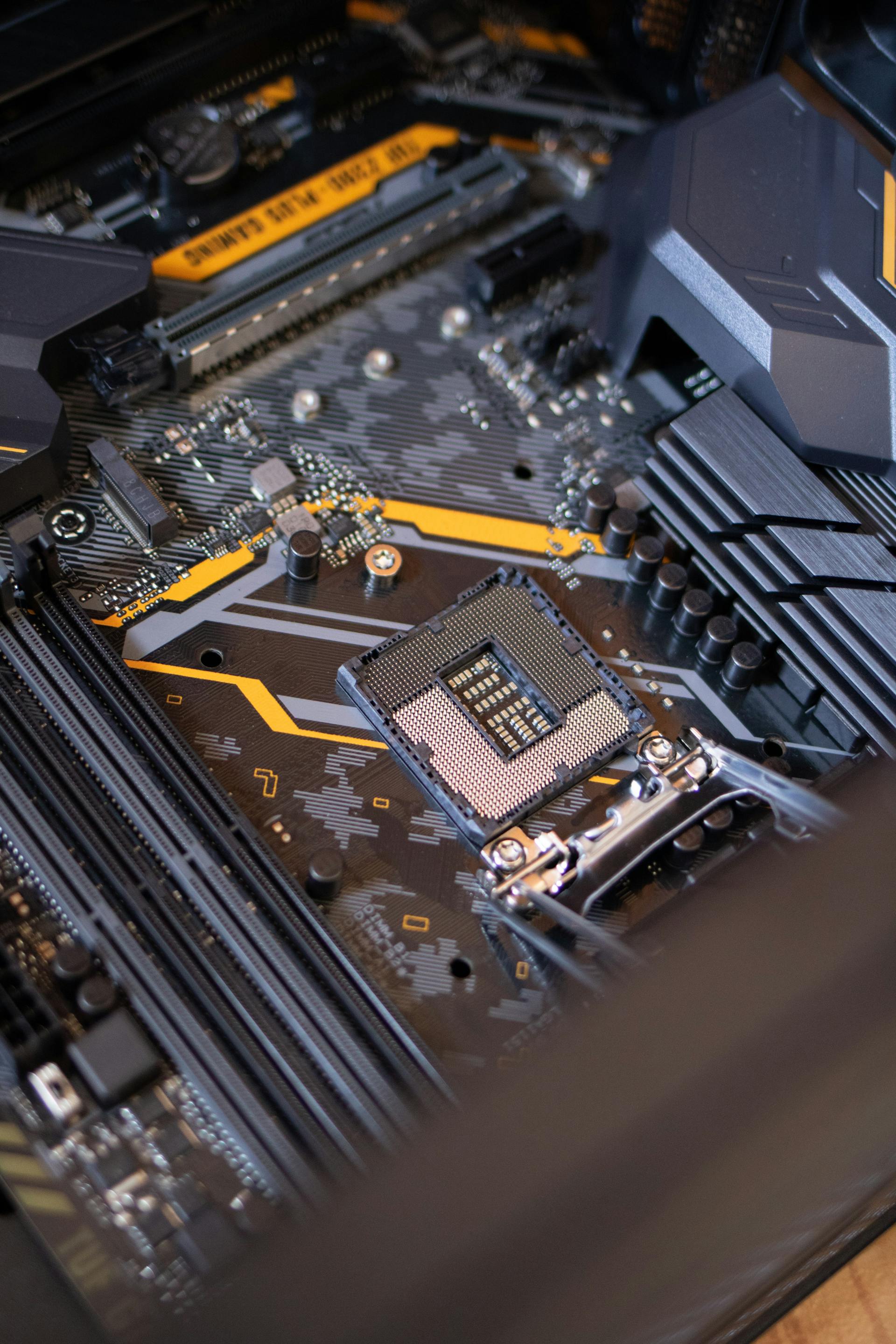
Each NXPU module is independently testable with a defined interface contract. The architecture composes: causal results feed probabilistic rules, which feed deterministic chains, with the full proof tree preserved.
Classical Datalog: unification, join, projection, and recursive fixpoint computation. Rules compile to microcode processed without branching. Semi-naive strategy ensures each fact derived exactly once.
Every fact annotated with confidence in [0,1]. Product t-norm for conjunction, probabilistic sum for disjunction. Multiple derivation paths combine correctly. The proof tree records which path contributed what weight.
PC algorithm with configurable significance thresholds. Conditional independence tests, skeleton construction, and edge orientation via Meek's rules. Output DAGs load directly into the rule engine.
Not a justification generated after the fact. The derivation path is the computation itself. Every conclusion traceable to its axioms. Every confidence score decomposable into contributing evidence.
Domains where NXPU replaces guesswork with provable, auditable reasoning.
Drug interaction reasoning, clinical decision support with full audit trails, adverse event causal analysis
Transaction chain analysis, AML compliance checking, fraud causal graphs with regulatory traceability
Statutory reasoning, precedent chain verification, contract clause entailment with proof export
Attack graph reasoning, root-cause analysis from telemetry, automated threat attribution
Mission planning with provable constraint satisfaction, kill-chain analysis, sensor fusion with provenance
Target: Xilinx xczu7ev (ZCU104), 100 MHz
Utilization: 25.4% LUT
Subsystems: 9 independently validated modules
Rule Packs: 24 across 6 reasoning rungs
Validation: 46/46 testbenches, F1=0.824 on Sachs (11-protein causal network)
License: MIT, full RTL at github.com/dyber-pqc/NXPU-public
Research partnerships. Integration pilots. Custom rule packs for your domain.
nxpu@dyber.org